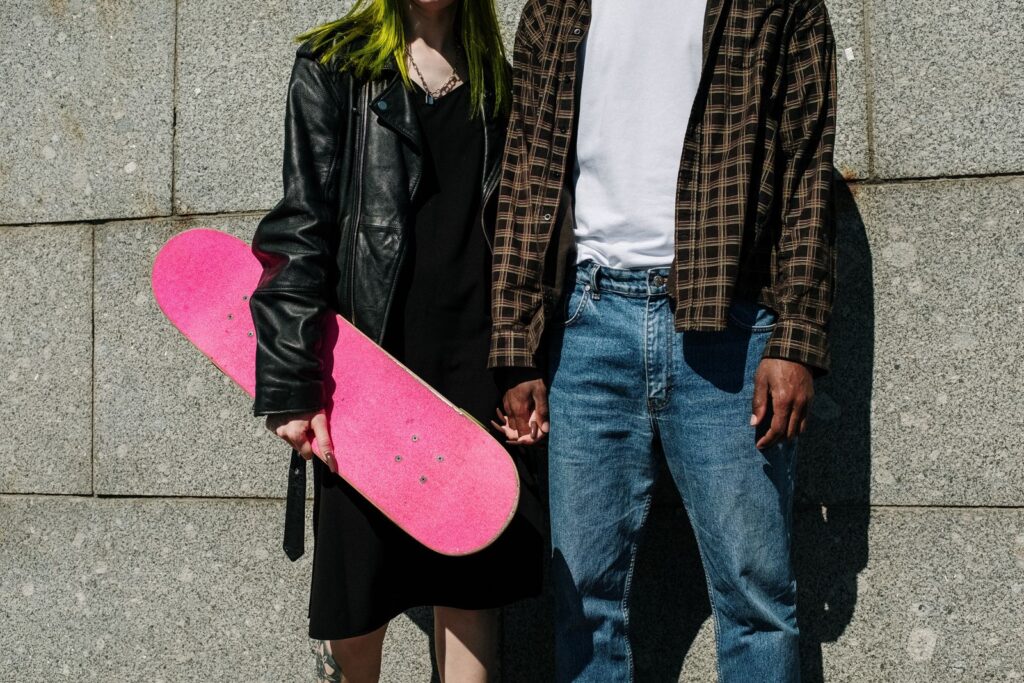

The most culturally significant, boundary-pushing creative projects rarely occur in a vacuum; they happen violently and beautifully at intersections. They occur where high-fidelity music production meets interactive technology, where high-fashion aesthetics meet the brutal functionality of athletic wear, and where the raw, unpredictable energy of a live vocal performance meets the surgical precision of studio engineering. These multi-disciplinary collisions produce something far greater than any single discipline could achieve alone. When it comes to finding a physical expression for these collisions—a material capable of holding multiple, often contradictory meanings simultaneously—leather is the undisputed champion. With its unique capacity for both rugged, working-class authenticity and elite, untouchable elegance, leather is the natural canvas for the art of the remix.
The Art of the Remix: Honoring and Innovating
When a legendary producer like Labrinth steps into the studio to take a classic, nostalgic song like “Show Girl” and completely reimagine it for a modern initiative like the Reethym of Lite campaign, the artistic challenge is immense. The goal is not simply to aggressively update the sound with modern synthesizers; it is to deeply honor the soul of the original composition while creating a sonic experience that feels genuinely, startlingly fresh. The absolute best remixes find hidden, unexplored elements in the source material and bring those buried qualities roaring to the forefront.
The contemporary world of artisanal leather craftsmanship operates on this exact same remix logic. The traditional techniques of leatherworking—the slow steeping of vegetable tanning, the painstaking locking of a hand-sewn saddle stitch, the friction-based burnishing of raw edges—represent the “original acoustic arrangement” of the craft. When modern, visionary artisans innovate within this space, they are not erasing history; they are remixing it. They take a 150-year-old classic pattern for a postman’s messenger bag and reconstruct it using matte-black tactical hardware, laser-cut panels, and water-resistant rubberized leathers. They find entirely new applications for ancient methods, revealing qualities the material always possessed but that previous generations of designers had not yet imagined.
Musical Textures and Leather Grains
In music production, texture is everything. A master producer layers a clean, razor-sharp digital synthesizer over a fuzzy, dusty, analog drum break to create a track that feels massive and three-dimensional. The friction between the clean and the dirty makes the ear pay attention.
Leather designers utilize this same principle of textural layering. A genuinely brilliant leather jacket or bespoke bag rarely relies on a single type of hide. An artisan will intentionally pair a flawlessly smooth, high-gloss French calfskin on the main body panels with heavily pebbled, rugged bison leather on the high-wear gussets and straps. This visual and tactile contrast—the smooth against the rough—creates a physical friction that makes the object infinitely more interesting to look at and to touch. It is a visual remix of raw materials.
Where Creativity Meets Functionality
The absolute best creative projects in the world are those that manage to solve a strict functional problem while simultaneously creating breathtaking beauty. A great, timeless song is emotionally devastating but also structurally sound enough to make a crowd of ten thousand people move in perfect unison. A great leather product is visually compelling, but it also securely carries the tools of your livelihood through a torrential downpour.
This dual requirement—the strict demands of engineering paired with the limitless bounds of art—elevates both music production and leatherwork far above purely decorative disciplines. Leather’s unique position at this demanding intersection explains its enduring, global appeal across centuries. It is a material that simultaneously satisfies the hand (supple, warm, responsive), the eye (rich grain, deep patina, natural variation), and the highly practical mind (durable, repairable, protective). Very few materials in human history offer this trifecta.
Creative Collaboration: The Studio and the Workshop
The most resonant creative work is never the product of a single, isolated genius. Musical production thrives on intense collaboration—producers, vocalists, session instrumentalists, and mastering engineers all contributing their distinct, highly specialized skills to a shared, singular vision. If one element fails, the track falls flat.
Similarly, exceptional leather goods emerge from a complex web of collaborative relationships. It requires the visionary designer who sketches the silhouette, the master tanner who understands exactly how to manipulate the chemistry of the hide to achieve the desired temper and color, and the meticulous bench-craftsperson who executes the final construction with flawless stitching. When this collaboration works perfectly, the resulting leather good expresses a unified creative intention through multiple, undeniable layers of world-class skill.
Sustainable Remixing: The Ultimate Upcycle
There is also a literal interpretation of the leather remix that is gaining massive traction in the modern era: upcycling. Just as a DJ samples a forgotten 1970s vinyl record to build a hit 2026 hip-hop track, modern leather artisans are sampling the past to build the future. Because high-quality leather outlasts the stitching and hardware that holds it together, artisans are increasingly rescuing damaged, vintage leather jackets and heavy equestrian tack, deconstructing them, and “remixing” the beautifully aged, deeply patinated leather into stunning new wallets, watch straps, and minimalist tote bags.
This is the ultimate form of sustainability. It honors the incredibly long lifespan of the material and ensures that the history embedded in the leather’s patina is not lost to a landfill, but is instead given a brilliant second life in a completely new context.
Conclusion: The Ongoing Conversation
The collision of music, high fashion, and leather craftsmanship is not a fleeting trend or a momentary marketing campaign—it is an ongoing, vibrant cultural conversation. Every time a creative project brings these elements together, whether it is an artist like Labrinth redefining stage wear or a designer reimagining a classic silhouette, new possibilities are discovered. And at the absolute center of that loud, chaotic, beautiful conversation, leather remains exactly what it has always been: a material rich enough, durable enough, and honest enough to carry whatever brilliant new meaning creative hands decide to bring to it.