How to Clean a Leather Bag Without Causing Damage
Why the finish decides the cleaning method
A leather bag is rarely a single, uniform material. The surface can be aniline, suede, nubuck, patent, Saffiano or a smooth finished leather, and each responds differently to water, soap and ordinary dirt. Safe cleaning begins with the same rule from every source behind this article: identify the leather type of your bag before attempting any cleaning at all. [1]
From there, the maker of the bag decides how to clean it. That is why this article deliberately offers no single recipe for cleaning every bag: the sources agree on the basic order, then part company over cleansers, conditioning oils and household tricks. The safe route is simple: avoid household cleaners and go gently, type by type. [1] [2] [3]
Before you start: name the finish and check the maker's instructions
Start by naming the finish, since the type decides how the bag may be cleaned. Leather UK advises always identifying the type of leather you have before cleaning, using only products correct for that type, and if in doubt contacting a leather specialist for advice. Even a washable leather bag should not go into a washing machine without specialist advice first. The same guide points to an interactive leather-type checklist for anyone unsure how to tell what they own. [1]
The maker is the second authority, and its instructions decide how to clean the bag. Aspinal of London's guidance changes with product type: a leather handbag calls for different care from gloves, belts and journals, and its glove-cleaning method using soap flakes and hot water is not meant for handbags. Jekyll & Hide's rules about mild soap and regular conditioning apply to its own full-grain vegetable-tanned goods, not to every leather on the market. [2] [3]
The leather type matters because different surfaces take water and stains differently. Napped leathers are stained by water and oil, so dry cleaning suits them; aniline is dyed through rather than coated, so ink re-dyes the skin and body oil appears as dark patches. Fully coated leathers, by contrast, are built to take a gentle damp clean; that is how one guide's praised cleaner can become another type's hazard. [1] [2]
Where the advice conflicts, the specific brand note decides how to proceed. Leather UK's clearest warning is against household cleaners, hacks and internet hints and tips: some products can cause a lot of expensive damage when used on the wrong type of leather, and a leather specialist is what replaces them. Leather UK's own napped-leather guidance adds that how you brush matters as much as the product choice: use light, quick strokes and follow the nap in one direction, even for a stubborn mark. [1]
The everyday minimum: dry dusting, then a barely damp cloth
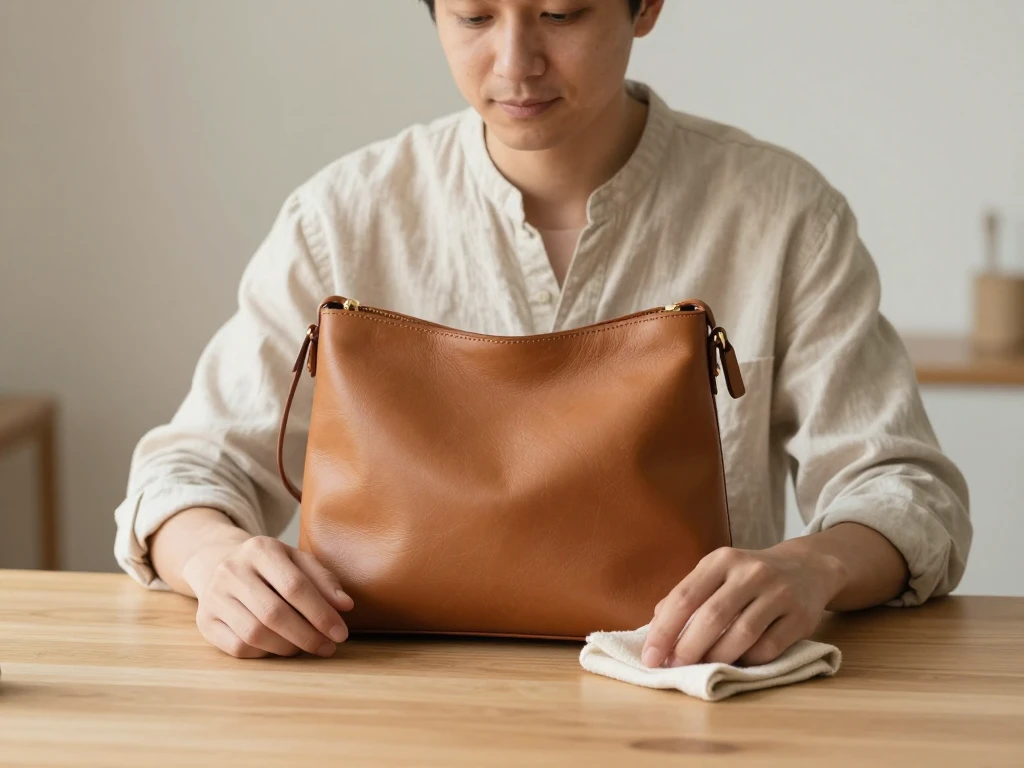
To clean ordinary loose dirt from leather bags, dry always comes first. A soft dry cloth can remove everyday dust from most bags, and a soft-bristle brush suits smooth and black leathers. Leather UK's general routine for fully finished leather adds one preliminary step: lightly vacuum first to remove loose particles so they cannot cause abrasion, and for napped leather, a stiff brush lifting the nap is the dry-care equivalent. [1] [2] [3]
If the maker of your leather bag allows you to clean with water or directs you to use a leather cleaner, here's how the same careful pattern keeps the surface clean across sources. Leather UK's regular-cleaning routine for fully finished leather takes a cloth soaked in mild soapy water, not detergent, wrung out until moist, applied in gentle circular motions while turning the cloth regularly, then repeated with a microfibre cloth rinsed in clean warm water. Jekyll & Hide's version is shorter: a barely damp cloth, a small amount of mild soap, residue wiped off immediately, never saturation. [1] [3]
Aspinal's everyday care for its own leather handbags shows how to keep routine cleaning gentle for specific leather types: black and ebony leathers are forgiving and take soft brushing and a damp cloth every so often, a cream or ivory leather handbag gets a wipe free of dust before anything else, and Saffiano, with its waxed textured coating that resists a stain, is cleaned only with a soft damp cloth or a specific leather cleaner; avoid other cleaners on this leather. These are brand-scoped suggestions for those leather types; for any other bag or handbag, ask its maker first. [2]
Beyond those two tools, restraint is the rule when it comes to cleaning a bag. Leather UK's list shows how far home cleaning should go: don't use cleaning fluids unless the manufacturer specifically directs them, don't over-clean, and on finished leathers skip wax and spray polishes whose silicones can turn sticky and catch dust as an abradant. The mild-soap routine, meanwhile, always comes with the same qualifiers: no detergents, no household products and no soaking. [1] [3]
When to stop: stains and finishes that need a specialist, not a home remedy
Some stains are specialist territory from the start. Suede and nubuck with a major problem always require specialist cleaning services, and aniline may require specialist products and knowledge to restore successfully. Attempting to clean these at home is fraught with danger, Leather UK says, particularly once household products are involved. [1]
Ink is the clearest example of stains you should not try to clean yourself, and it shows how timing matters. On finished leather bags, act quickly with a formulated ink remover made for leather, never a household product, and a protected surface is easier to clean. On aniline the ink has re-dyed the leather itself, so you cannot remove it; on suede or nubuck, leave the stain to a specialist. [1]
Grease stains and dye transfer run parallel. Body-oil contamination may need professional degreasing, and head grease on aniline is best left to a technician because colour restoration is often needed afterwards. Denim can transfer dye onto pale furniture, car interiors and light-coloured bags; although dye transfer can be removed from finished car leathers if caught quickly, regular cleaning and protection prevent it in the first place. [1] [2]
Even gentler brand remedies are finish-bound. Minor scuffs on a finished leather bag can be coloured out in the maker's approach; more damaged areas need professional restoration. Absorbent powder left overnight on oily suede marks and a small amount of petroleum jelly on patent scuffs are steps from one brand guide, not a licence to apply the same tricks on other finishes, where they become exactly the household hacks Leather UK warns against. [2] [1]
Drying and storing a cleaned bag without undoing the work
If your leather bag gets wet during a clean or everyday wear, here's how to dry it: gently blot excess water with a dry cloth, then leave it to air dry naturally at room temperature, away from direct heat, radiators, dryers and sunlight. Jekyll & Hide warns heat stiffens and cracks leather, and Leather UK adds that high temperatures and humidity feed mould growth in the fibres; sunlight, meanwhile, fades every leather to some extent, so a dim, well-ventilated room is the right place to dry and store the bag. [3] [1] [2]
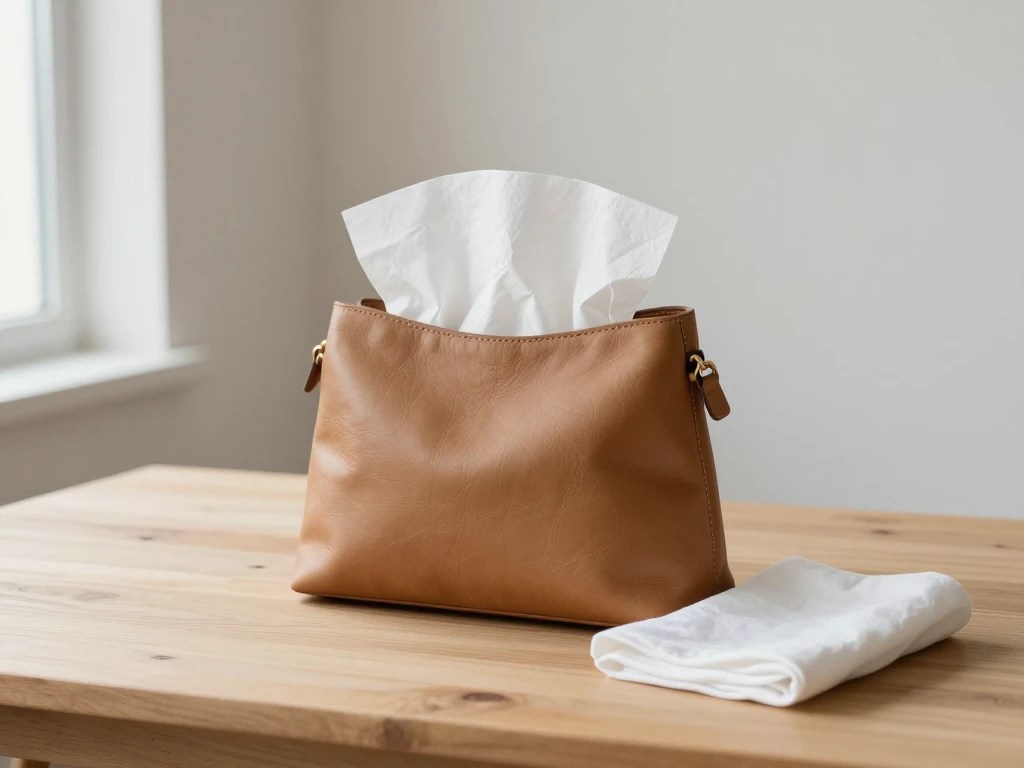
How you store a cleaned bag matters almost as much as the cleaning itself. Empty the bag and gently fill it with plain acid-free tissue paper to maintain its shape, and for longer storage wrap zips and clasps in tissue so the hardware does not print. Cover it with the original dust bag or a white cotton pillowcase rather than coloured fabric, and stand it on its base, since hanging can stretch the handles. Keep pale leather away from darker colours, and avoid plastic, since plastic bags trap moisture and cause mildew. For travel, keep the leather bag in a protective cover and store it in a protective bag between trips. [2] [3] [1]
Here is how protection works between cleans: Jekyll & Hide recommends a protector spray on new lighter-coloured leathers before first use, reapplied every six months or after heavy wet wear, always testing on a small hidden spot first; Aspinal likewise advises a protective spray after you clean pale colours, and Leather UK says protected leather makes stains easier to remove when a mark does happen. [3] [2] [1]
Here is how conditioning fits in: it happens after your bag is fully clean and dry, and always at the maker's direction. Jekyll & Hide conditions its full-grain vegetable-tanned goods every three to six months with a beeswax- or lanolin-based conditioner, working it in circular motions and buffing off the excess afterwards. Leather UK notes that on chrome-tanned finished leather, oils and waxes cannot reach the leather through the surface coating, so they sit on top and attract dirt. The same product is right on one leather type and counterproductive on another. [3] [1]
The two-minute stop/go check before you clean
Go, dry. The leather type is identified and your leather bag is simply dusty: a soft dry cloth, a soft brush, or a napped-leather brush following the nap in one direction lifts the day's dust off the bag, and the job is done. [1] [2] [3]
Go, damp. The maker allows it and the leather type suits the bag. Here is how to clean your bag: a moist microfibre cloth, at most a small amount of mild soap, gentle pressure, residue wiped off at once, then natural drying away from heat, and a protector spray afterwards where the maker recommends one. [1] [2] [3]
Stop and ask before treating. The leather type is unknown, ink, grease or staining has hit aniline, or a suede or nubuck stain is serious: contact the maker's care guidance or a leather specialist first. Ink on a finished leather bag and oily marks on suede or nubuck are home jobs covered by the finish-specific steps above. A soaked bag needs first aid now, not later: blot the excess water and air-dry it away from heat before asking about any deeper cleaning. [1] [2] [3]
That order is the whole method: type first, maker second, dry first, moisture at most, and the specialist's line sits earlier than most of us expect. To avoid the most expensive mistake, remember that stains are type-bound: the wrong product on the wrong type is the most expensive way to clean a leather handbag, and some stains that look simple are professional jobs. That same order, with the type deciding which product is wrong, is how to approach any mark or stain on any bag you own. [1]
More leather care and buying guides