How to Remove a Stain from Leather: Bags, Wallets and Belts
How to Remove a Stain from Leather at Home
If you searched for 'how to remove stain leather', the answer starts with the leather: knowing how the finish behaves comes before any product choice. Many everyday marks on items such as a leather bag, wallet or belt can be removed at home, but the safe method depends as much on the leather's finish as on the type of stain: a method that works on one leather item may not remove the same stain from another. How to use this guide: identify the finish, find your stain, then use the treatment listed for that combination. The two UK makers this guide draws on — Aspinal of London and Jekyll & Hide — both start with the same advice on how to clean: routine dust and dirt respond to gentle cleaning, while anything stronger must suit the leather. [1] [2]
For everyday dirt and dust, Jekyll & Hide recommends a soft dry cloth, and for deeper cleaning a barely damp cloth — avoid saturating the leather. Wipe off any residue immediately and leave the item to dry naturally away from heat. Aspinal gives similar day-to-day advice: soft brushing for darker leathers plus a damp cloth to remove daily build-up. Gently clean the area with a barely damp cloth and a little mild soap to remove a light stain. [1] [2]
The guides also document how to remove specific types of stain at home. Oil and grease on Aspinal's cream and ivory leathers can be removed with absorbent powders; light oily marks on suede and nubuck can be removed with cornflour; and ink on the same cream and ivory leathers can be removed with methylated spirits or rubbing alcohol. Colour transfer can happen when dye from dark clothes such as indigo jeans rubs onto a light leather bag; Aspinal notes that white bags can pick up colour this way, so clean the mark promptly. Each of these stain-removing treatments is tied to a particular finish, so read the section below before using any product. [1]
Other stains are best left for the professionals. Aspinal recommends a professional dry-cleaning service for velvet, and Jekyll & Hide asks customers with stubborn stains to contact its leather care specialists rather than try to remove them at home. If you cannot identify the finish, or the stain has already set, the answer to 'how to remove stain leather' is to hand the item to a professional. [1] [2]
How to Identify Leather Types and Finishes First
The first step is to identify the leather you are cleaning; how the stain behaves depends on the finish. Once you know the leather type and finish, you can choose a safe way to remove the stain — so learn how to spot the main types first. The two guides cover different types of leather: Jekyll & Hide's advice applies to full-grain vegetable-tanned leather, while Aspinal's spans patent, saffiano, smooth, textured, printed, suede and nubuck, plus exotic skins. A treatment safe on one can damage another, so read the relevant section before you apply anything to the leather. [1] [2]
Saffiano is a good example. Its stamped cross-hatch texture and wax treatment make it durable and stain resistant, but that specialised finish is easily damaged. Aspinal says to clean the leather only with a soft damp cloth or a specific leather cleaning solution. [1]
Patent and high-shine leathers are at the other end of the spectrum: scuffs can be lifted with a damp cloth, a dedicated patent cleaner, or petroleum jelly or olive oil applied for a few minutes and gently buffed away. Smooth leather, by contrast, should never be treated with abrasive methods — clean it with a soft bristle brush and a cotton or microfibre cloth, then apply a gentle leather conditioner tested first on an inconspicuous spot. A cleaner designed for one leather finish may not be suitable for another, which is why the guides name the finish before recommending a product. [1]
Textured leathers such as lizard, pebble and silk print need to be cleaned with the grain, with any product build-up then removed from grooves and crevices. Suede and nubuck are the most water-sensitive: water and oil can stain them, so dry cleaning methods are advisable — a suede brush first, with a short burst of steam if extra help is needed. [1]
If you are not sure how to classify your item, read any label, care card or the maker's own guidance to see how to clean it before applying anything to the leather. Where instructions conflict — as they do on alcohol, discussed below — the manufacturer's guidance should take priority. Neither guide names aniline or semi-aniline finishes, leather furniture, car upholstery or paint marks, and neither recommends saddle soap — do not carry a furniture or car-seat remedy over to a bag. If your item falls outside the finishes the guides cover, or you cannot find spot-treatment instructions, leave stubborn stains to a professional rather than risk a general-purpose leather stain remover. [1] [2]
How to Remove a Fresh Stain Safely
React quickly, but gently, and know how to respond first: a fresh liquid spill is the easiest stain to remove, and the first step is to blot the wet spot with a clean, dry cloth before it soaks in. Aspinal says velvet spills should be blotted, not rubbed, and Jekyll & Hide advises the same for wet leather. Rubbing is the wrong next step: it pushes the stain further into the surface, spreads it, and makes it harder to remove. [1] [2]
If the leather itself is wet, blot away the excess water with a dry cloth and allow the item to dry naturally at room temperature. Never use a hairdryer, radiator or direct sunlight to speed up drying — heat makes leather stiffen and crack. Once it is fully dry, apply a leather conditioner to restore suppleness. [2]
How much water is safe? The guides agree: use minimal water. Jekyll & Hide says never saturate the leather, and Aspinal repeats the caution for gloves and snakeskin, dabbing away excess moisture and drying naturally away from artificial heat. If the item with the stain is a handbag, empty it completely before cleaning — Aspinal notes that packed handbags can warp. [1] [2]
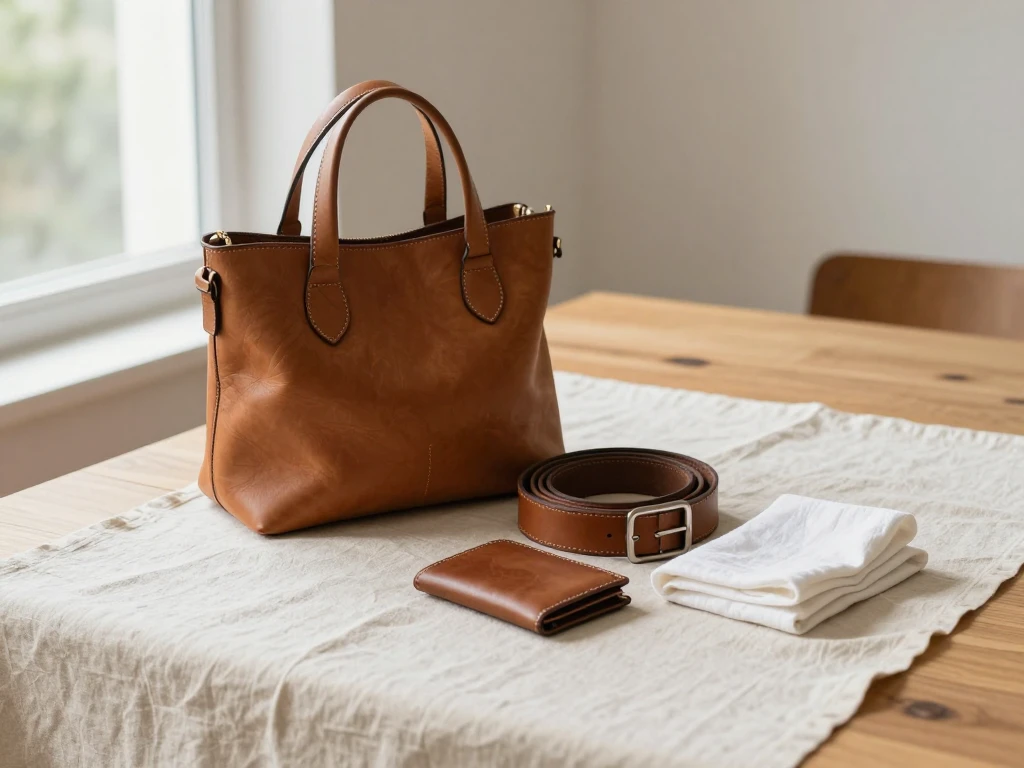
A little preparation helps for leather belts, wallets and handbags too. Take belts off at the end of the day, wipe them clean of dust, and hang them by the buckle in a cool space away from direct heat and sunlight. A wallet should not be overfilled — overstuffed pockets and card slots risk stretching the leather, which only adds a second problem while you try to remove the stain. For a leather handbag in storage, empty it completely and stand the handbag upright on its base, filled with plain acid-free tissue paper to hold the silhouette, away from direct sunlight and heat; a handbag stored this way keeps its shape. [1]
Avoid rubbing the stain, avoid adding any cleaner or solvent before you have identified the finish, and avoid applying heat to wet leather. The safe process is simple, and each step is gentle: blot, dry at room temperature, then condition. Those three steps protect the leather while you decide how to treat the stained spot. [1] [2]
How to Remove a Stain from Leather: Spot Treatments for Oil, Ink, Water and Spills
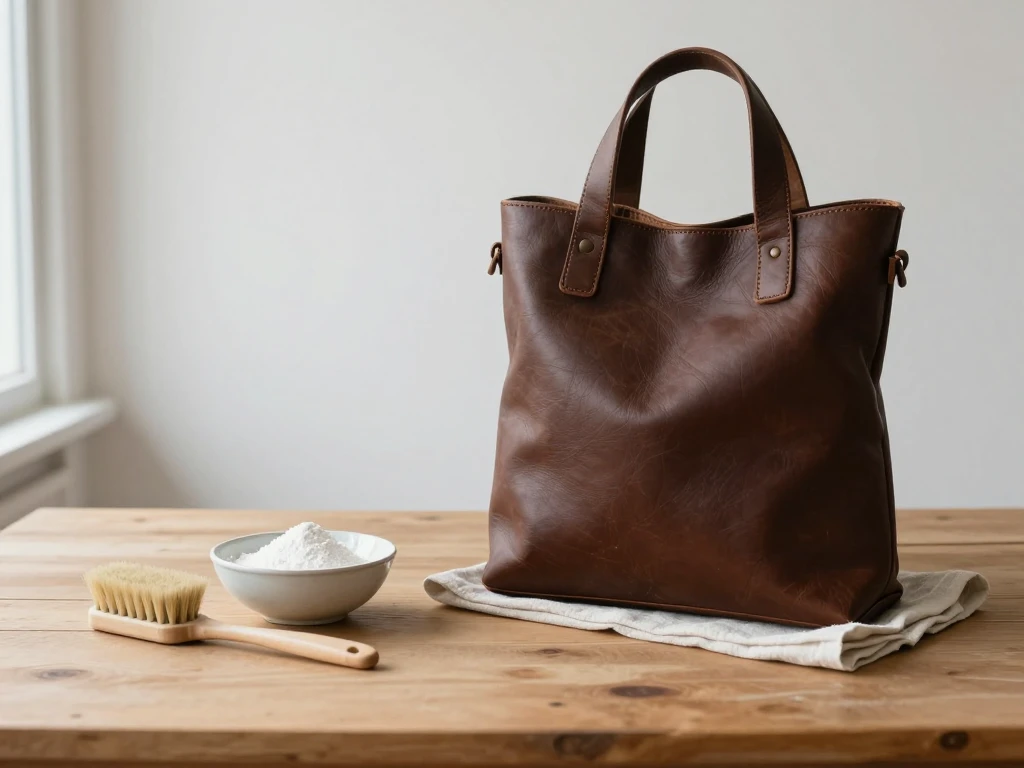
Oil and grease. On Aspinal's cream and ivory leathers, absorbent powders such as corn starch or baking powder can lift oil and grease. On suede and nubuck the approach is similar but material-specific: apply cornflour and leave it overnight, then gently brush away the excess the next day. The powder works by absorbing the grease without wetting the leather. For tougher suede or nubuck stains, however, Aspinal advises using a dedicated suede or nubuck cleaning solution instead of repeating the powder treatment. [1]
Ink. Aspinal says methylated spirits or rubbing alcohol will remove ink stains from its cream and ivory leathers. This is not a universal recipe: Jekyll & Hide warns against alcohol wipes on full-grain vegetable-tanned leather, which can strip natural oils and damage the leather surface. If your item's maker does not document alcohol as a safe stain remover, treat it as untested on your leather. [1] [2]
Water marks and wet spills. When leather gets wet, blot the excess, dry it at room temperature away from heat, and condition it once dry. Aspinal gives the same drying instruction for gloves caught in rain or snow: dry naturally away from sunlight and artificial heat. [1] [2]
Coffee and wine. Neither maker publishes a dedicated recipe for coffee or wine stains, so there is no documented universal leather stain remover for them. For these spills, blot the fresh mark immediately with a dry cloth, let the leather dry naturally, then spot clean with the item's finish-appropriate method. On Aspinal's cream and ivory leathers, subtle marks can be buffed away with a solution of soap flakes and warm water. [1] [2]
Colour transfer. A light handbag worn against dark clothes can pick up dye, and Aspinal notes that this sort of transfer needs cleaning to keep the finish pristine. Start by wiping the dust off with a soft cloth, then remove the spot as you would any surface stain on that finish, before it has time to set. [1]
How to Choose a Safe Leather Cleaner to Remove Stains
The closest thing to a safe general-purpose leather cleaner in either guide is mild soap; neither recommends a universal leather stain remover. Jekyll & Hide uses a barely damp cloth with a small amount of mild soap for deeper cleaning, removing any residue immediately and air-drying away from heat. Aspinal's glove method is similar: a sponge with a solution of soap flakes and warm water, avoiding oversaturation. If mild soap and a damp cloth do not remove the stain, stop rather than scrubbing harder. [1] [2]
Alcohol is where the guides diverge. Aspinal recommends methylated spirits or rubbing alcohol for ink on its cream and ivory leathers; Jekyll & Hide explicitly advises against alcohol wipes for its full-grain vegetable-tanned leather. The difference shows why finish identification comes first: the same product that removes one stain can strip another leather's natural oils. [1] [2]
Vinegar and other household recipes. Neither care guide mentions vinegar, so a home remedy for 'how to remove stain leather' that relies on vinegar sits outside the documented advice for these makers, as do other unvetted household products: Jekyll & Hide warns against chemical-based cleaners and ordinary household detergents, which can damage the surface. Before removing stains with such a cleaner, read the maker's care guidance first. [1] [2]
Different types of leather cleaner suit different leather finishes: patent leather cleaning products, suede and nubuck solutions, and specific leather cleaning solutions designed for saffiano. These are finish-specific leather stain removers rather than universal formulas. Aspinal recommends testing conditioners on an inconspicuous spot, and both makers advise spot-testing protective sprays on a small hidden area first and watching how the leather reacts. Choose the cleaning product named for your finish and follow the maker's instructions when applying it. [1] [2]
How to Know When to Stop Removing Stains and Call a Professional
Both guides draw a clear line between stains you can remove at home and professional work. Aspinal recommends a professional dry-cleaning service for a stain on velvet; Jekyll & Hide asks customers with stubborn stains to contact its leather care specialists. When the maker's published steps run out, stop experimenting. [1] [2]
Treat a leather stain professionally rather than removing it at home when it has set before you noticed it, when it sits on a delicate material such as velvet, when the finish is unknown, or when the documented steps — blotting, mild soap and the finish-appropriate treatments above — have not removed the stain after a careful attempt to clean the leather. [1] [2]
In the UK, a brand's aftercare team or a leather repair specialist knows how to assess the leather's finish and can use treatments that go beyond home care. If you are in doubt, escalate rather than experiment: a mark on a treasured bag, wallet or belt is easier to treat professionally than a finish damaged by a failed DIY attempt. [1] [2]
Prevention is the most reliable step. Jekyll & Hide recommends applying a leather protector spray to new items before first use — particularly lighter colours — and reapplying it every six months or after heavy use in wet conditions, always testing on a small hidden area first. For storage, the same maker recommends standing bags upright, keeping your handbag in its cotton dust bag and out of direct sunlight; never store a handbag in plastic, which traps moisture and can cause mildew on leather. [2]