Is Leather Waterproof? A Rain-Ready Guide to Leather Bags, Wallets and Belts

Is leather waterproof? The short answer
Leather is not waterproof in the way rubber or plastic is, and no routine makes any leather fully waterproof. It is a natural, porous material, so rain can soak into it rather than run off, and how the leather copes depends on its finish, construction and condition. That is why the UK trade body Leather UK starts its care guidance by asking you to identify your leather type first: no material label carries a waterproof claim, and 'waterproof' describes a performance standard, not a leather label. [1] [2]
Labels describe the leather material, not the weather. 'Full-grain' or 'vegetable-tanned' tells you about the quality of the leather and the tanning process; it does not measure how much water the finished item can withstand. Jekyll & Hide, a UK maker of quality full-grain leather goods, is clear that even this durable leather needs regular conditioning and sensible leather care rather than being treated as waterproof. In short: durable leather is not waterproof leather — the full-grain label carries no waterproof guarantee. [1]
Real rain-readiness of a leather item comes from the finish and from maintenance, not from the material alone, and it varies across leather types. For leather bags, wallets and other leather accessories, a surface treatment, a leather protector and regular leather conditioning all influence water resistance; the quality of that protection depends on the leather finish. None of this is a waterproofing guarantee, and products that suit one leather finish can damage another — so the short answer is: no leather is waterproof by default, and 'waterproof leather' is at best a finish-specific claim. Leather waterproofing, in other words, is a maintenance process rather than a one-off treatment. [2] [1]
Why the finish matters more than the label
The first rule from Leather UK is to identify the type of leather before attempting any cleaning or protection. Not all finishes behave alike: some are coated, some are dyed through with little surface protection, and some have a brushed nap. The trade body is blunt about why this matters: household products and internet hacks can cause expensive damage when used on the wrong finish. [2]
Finished and coated leathers are often the most forgiving type of leather in the wet. Aspinal of London describes its Saffiano leather, with its signature cross-hatch texture and wax treatment, as incredibly durable and stain resistant, and recommends you clean it with only a soft damp cloth or a specific leather cleaning solution so the specialised leather finish is not damaged. Smooth, fine and patent leather finishes, the brand notes, benefit from a soft leather cream; note the wording: stain resistant is not water resistant, and water resistant is not waterproof — neither leather term is a waterproof claim, and 'stain resistant' is never a waterproof label either. [3]
Aniline leathers sit at the other end of the spectrum. These leathers are dyed through rather than protected by a coating, and Leather UK's contributors note that aniline styles may need specialist products and knowledge to restore successfully, that body oils show up as dark patches, and that ink cannot be lifted at home because it re-dyes the leather. Treat aniline as a high-maintenance finish in wet weather. [2]
Suede and nubuck are the most water-sensitive of the leather types, and neither counts as a waterproof leather. Aspinal of London advises that water and oil can stain these leathers, so leather cleaning methods without water are preferable, and Leather UK's contributors add that serious problems on these finishes will usually require specialist leather cleaning services. For wet suede, dab away excess water, leave the item overnight in a dry, well-ventilated spot, and brush the leather lightly once it has dried — never next to a heater. [2] [3]
Conditioning advice divides along the same lines. The maker's own guidance recommends beeswax- or lanolin-based conditioners every three to six months for its full-grain leather goods. Leather UK's contributors give the opposite warning for modern finished leathers: oils and waxes cannot get through the coating, so they sit on top and attract dirt. One maker's recipe is never a universal rule. [1] [2]
Bags, wallets, gloves and belts: the item changes the answer
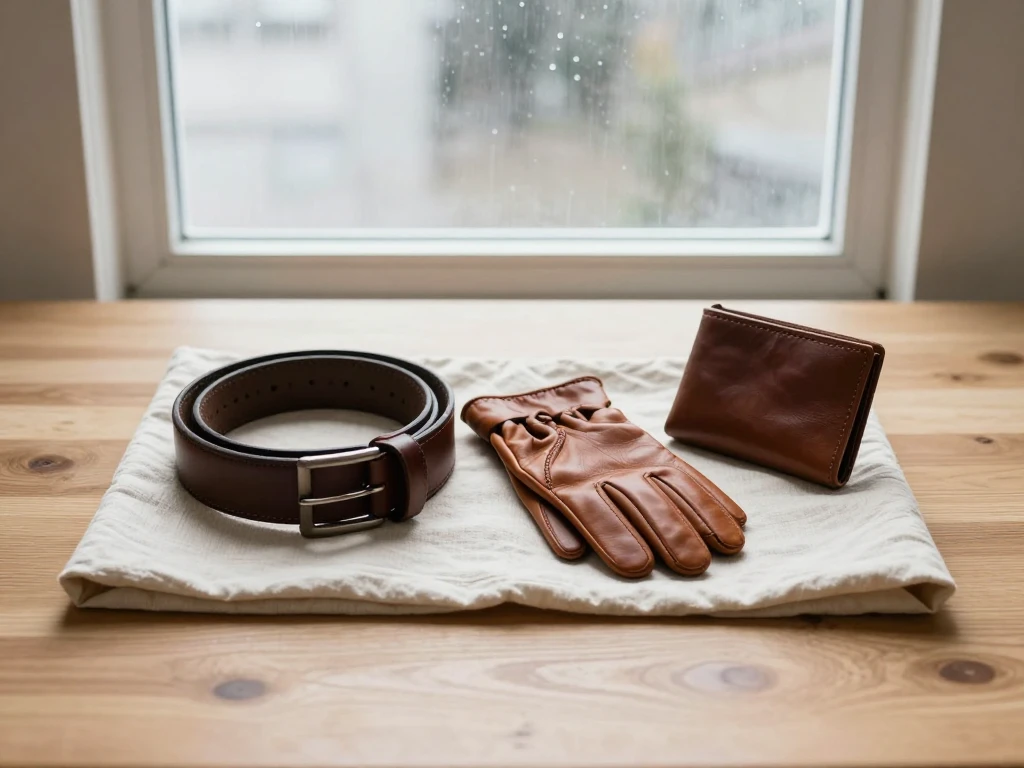
Finish is only half the story; the leather item itself changes what rain-readiness means, and rain-ready leather is not waterproof leather. Handbags, wallets, gloves and belts get different leather care routines because their exposure to water, wear and weather differs: a leather wallet is carried inside a handbag, gloves meet rain and snow directly, and belts are worn daily. Aspinal of London's guidance is product-specific for this reason, and its glove-cleaning method must not be applied indiscriminately to leather handbags. [3]
Handbag care is the most involved, and much of it protects the bag's structure. Aspinal advises emptying the bag completely to avoid warping, filling it with plain acid-free tissue paper, wrapping zips and clasps in tissue for long-term storage, and covering it in its dust bag — or a white cotton pillowcase, since coloured fabric can transfer. [3]
Store the covered leather handbag upright on its base, away from direct sunlight and artificial heat sources. The maker also warns against plastic storage bags, which trap moisture and can cause mildew on leather accessories. [3] [1]
Leather wallets, purses and belts are simpler but still need habits specific to the leather product. Aspinal advises not overfilling wallets and purses, which stretches the leather, and carrying a purse in a separate compartment or zip pocket to prevent scratches and imprints on the leather. Belts should be rotated between wears, wiped clean of dust, and hung by the buckle in a cool, well-ventilated place rather than rolled up, so the leather keeps its shape. [3]
Gloves get their own wet-weather routine because they take the weather directly. Aspinal recommends letting wet gloves dry naturally, away from sunlight and radiators, and cleaning a dropped glove by brushing it, then wearing it while you sponge the affected area with a soap-flakes solution, dabbing away excess water without oversaturating the leather. Dry them somewhere cool, putting them on now and then to keep their shape. [3]
What to do if your leather bag gets wet
If your bag gets caught in rain, act quickly but gently to limit water damage. Blot excess water with an absorbent cloth, then let the leather dry naturally at room temperature. The maker is explicit about what not to do: never use a hairdryer, radiator or direct sunlight to speed things up, because heat makes leather stiffen and crack. [1]
Once the moisture has gone, restore what the water has taken out. The maker recommends applying a high-quality leather conditioner after wetting to bring back suppleness; for its full-grain leather, that means a small amount of beeswax- or lanolin-based conditioner worked in with a soft cloth and buffed after about 30 minutes. For other finishes, check the manufacturer's guidance first: on modern finished leathers, oils and waxes are counterproductive. [1] [2]
Suede follows a different script. Soak up excess water with a sponge or dry cloth, dabbing gently until the leather is evenly damp, then leave the item overnight in a dry, well-ventilated area and go over it lightly with a suede brush once dry. Never put suede next to a heater or through a dryer, and expect serious problems on suede, nubuck and aniline to need a specialist rather than a home remedy. [2] [3]
Dampness also brings mould risk. Leather UK notes that high temperatures and humidity can cause mould to grow in leather fibres, and Jekyll & Hide warns that plastic storage bags trap moisture and cause mildew — so make sure a wet item is completely dry before it goes back into a dust bag or cupboard. If in doubt, contact a leather specialist before trying anything stronger. [2] [1]
Protectors and sprays: when to use them and what to ask first
A leather protector is the closest practical step to rain-readiness — real protection, not a waterproof result — applied before the weather rather than after it. Jekyll & Hide advises treating new leather items before first use, especially lighter-coloured leather, and reapplying the protector every six months or after heavy use in wet conditions, always testing a new product on a small hidden area first. Treat it as leather protection, not a waterproof guarantee — no spray makes a leather bag waterproof. [1]
Lighter colours genuinely benefit most. Aspinal of London notes that a light leather bag worn with indigo jeans can pick up colour transfer, and suggests applying a protective spray after cleaning to safeguard against further marks and stains — not to make a leather bag waterproof. For printed and delicate finishes, the brand gives the same caution: test conditioners and sprays on an inconspicuous area, such as a corner or under a pocket flap. [3]
Before you buy any treatment, ask the maker three things: which finish your item has, which treatment is formulated for that finish, and what is in it. The trade body warns that wax polishes and furniture treatments often include silicone, which can create an unpleasant sticky feel on leather and act as an abradant that traps dust — and that the wrong treatment on the wrong finish can cause expensive damage. [2]
If you cannot identify the finish or the maker has not confirmed a treatment, stop and ask. The same applies after a spill: some finishes always need specialist cleaning, and DIY on aniline, suede or nubuck is risky. Remember that brand routines are written for that brand's own materials and finishes, and product claims from industry contributors are not independent testing — treat 'stain resistant' and 'waterproof' as leather care claims, not guarantees. [2] [1] [3]
A rain-readiness checklist for leather goods
Before you carry leather goods through a UK autumn, run through this checklist: no listed leather finish counts as fully waterproof by itself. First, identify the finish — coated, aniline, suede or nubuck — and find the maker's care guidance for that exact finish; if it is not clear, ask the brand before doing anything to the leather. [2] [1]
Second, match the plan to the item. Handbags earn the full routine: emptied, tissue-stuffed, dust-bagged and stored upright on their base, away from radiators and sunlight. Wallets need the anti-stretch and anti-scratch habits, belts benefit from rotation and hanging by the buckle, and gloves need their own airflow-drying routine after rain. [3] [1]
Third, know the wet routine by heart: blot with a dry cloth, air-dry at room temperature, never apply heat, and condition afterwards if the finish allows it. For suede, dab, ventilate and brush instead. When a stain, finish or product is in doubt, the step that applies to every leather type is the same: contact the maker or a leather specialist. [1] [2]
The bottom line is straightforward: there is no leather label that promises waterproof performance, and no routine makes any leather item waterproof. Maintenance is what keeps a leather item water resistant; identify the finish, match the care product, keep storage dry and respond to wetting gently — that routine does more for rain-readiness than any single leather care product, and it is what allows well-made leather to keep its looks through years of British weather. [1] [2]
Reesha — leather buying and care guides