
At first glance, the grimy, concrete-laden streets of 1994 Queensbridge, New York, might seem worlds apart from the quiet, meticulous workbenches of traditional leather artisans in Florence or Marrakech. Yet, true mastery transcends its medium. When a twenty-year-old Nasir Jones—known to the world as Nas—released his debut album Illmatic, he didn’t just drop a rap record; he delivered a flawless, enduring piece of art. It was an album so precisely constructed, so densely layered, and so uncompromisingly authentic that it permanently altered the trajectory of music.

If you closely examine the philosophies underlying the creation of Illmatic, you will find profound, unexpected parallels with the ancient art of leather craftsmanship. Both disciplines demand an obsessive commitment to raw authenticity, a refusal to compromise on the smallest details, and a profound respect for longevity. The creation of a perfect verse and the construction of a bespoke leather good are both acts of distillation—taking the raw, chaotic materials of life and shaping them into something permanent and beautiful.
Crafting a Masterpiece: Selecting the Raw Materials
The genius of Illmatic begins with its foundation: the beats. Rather than relying on a single in-house producer, Nas assembled a “dream team” of the era’s greatest sonic architects—DJ Premier, Pete Rock, Q-Tip, Large Professor, and L.E.S. He selected beats with the same agonizing care that a master leatherworker uses when selecting hides. A master artisan will inspect dozens of leather sides, running their hands over the grain, checking the thickness, and looking for the perfect balance of suppleness and structural integrity before making a single cut.
Similarly, Nas listened to countless instrumentals, seeking the perfect sonic canvas to hold the weight of his complex narratives. The production of a fine leather piece, like the production of a classic album, is determined long before the actual construction begins. If the raw material is flawed—whether it is a weak drum loop or a heavily scarred, overly processed hide—no amount of surface-level polishing will turn it into a masterpiece.
The Authenticity of the Streets and the Hide
Authenticity acts as the unbreakable cornerstone for both Illmatic and quality leatherwork. When Nas raps about the harsh realities of project life in tracks like “N.Y. State of Mind,” the power comes from unflinching specificity. He isn’t painting a glamorous, manufactured picture; he is delivering hard, observed truths. The word “illmatic” itself, coined within his inner circle, translates roughly to being supremely articulate and utterly genuine—authentic expression at its absolute zenith.
Premium, full-grain leather carries a parallel form of unmanufactured authenticity. Unlike “genuine leather” or synthetic alternatives that are sanded down and heavily coated in plastics to simulate a flawless, uniform look, full-grain leather hides nothing. It proudly displays the marks of the animal’s life—insect bites, stretch marks, and variations in the grain. These are not defects; they are proof of authenticity. They are the material equivalent of the gritty subway train roaring past in the background of a raw hip-hop track. Audiences and consumers alike possess a sixth sense for the genuine, which is why both Illmatic and uncorrected leather goods endure while polished, artificial imitations fade into obscurity.
Timberland Boots and NYC Leather Culture
You cannot discuss 1994 New York hip-hop without addressing the uniform of the streets, where leather played a dominant, functional role. The quintessential emblem of this era was the waterproof nubuck leather Timberland boot. Mentioned in verses and worn universally across the five boroughs, these boots were built for the harsh elements of the city winter. They were heavy, durable, and unapologetically rugged.
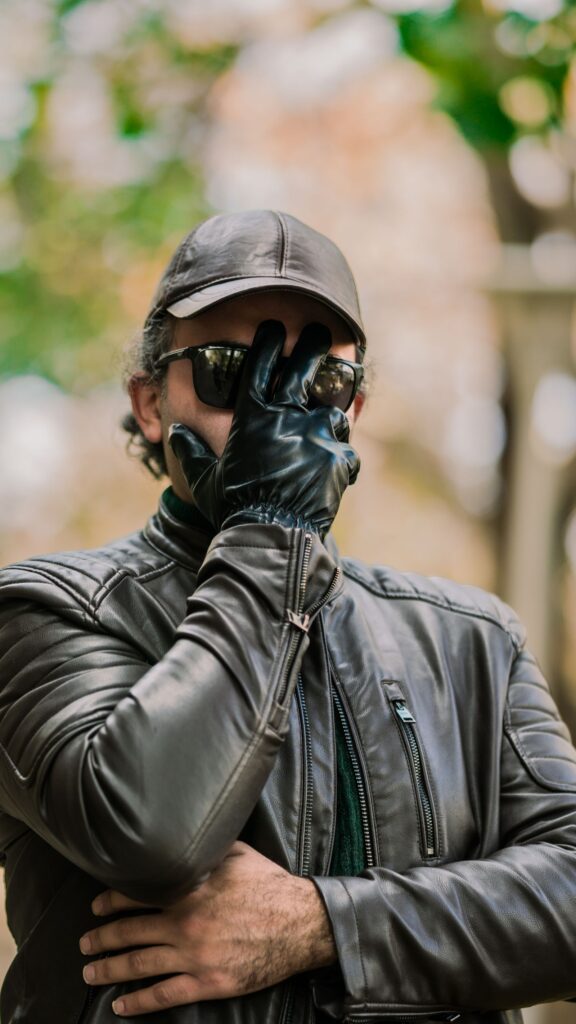
Coupled with thick leather bomber jackets and heavy belts, the leather worn during the Illmatic era wasn’t about high fashion; it was about survival, utility, and projecting strength. The aesthetic perfectly matched the music: heavy-duty, built to last, and inherently cool. The culture understood that good leather, like a good reputation on the streets, had to be earned and maintained.
Attention to Detail: Lyrical Density vs. Stitch Density
Nas elevated words into high art by sweating the micro-details. His rhyme schemes on Illmatic are legendary for their density. He utilized internal rhymes, complex metaphors, and multi-syllabic structures that require dozens of listens to fully unpack. Every single syllable is placed with deliberate, mathematical precision.
The best leatherworkers elevate material into art through the exact same obsessive refinement. Consider the saddle stitch—a traditional hand-stitching method where two needles pass through a single awl hole in an interlocking pattern. It is laborious and slow, but it creates a seam of unmatched strength and visual beauty. The relationship between the thickness of the thread, the spacing of the stitches, and the burnish on the edge of the leather determines whether the finished piece is merely competent or genuinely breathtaking. Both the lyricist and the artisan demonstrate that true brilliance is not a flash of sudden inspiration, but the cumulative result of thousands of tiny, intentional decisions.
Longevity and Timelessness
Over thirty years after its release, Illmatic is not treated as a nostalgic relic; it remains an active benchmark. Artists across every subsequent generation point to it as the foundational text of modern lyricism. Its influence compounds over time. It doesn’t age; it simply cements its status as a permanent fixture in the cultural landscape.
The finest leather goods follow this exact same trajectory. A mass-produced, fast-fashion bag will look terrible after a year of use. But a handcrafted, vegetable-tanned leather briefcase? It will look better on its tenth anniversary than it did on the day it was bought. Through exposure to sunlight, the oils from human hands, and the friction of daily use, it develops a rich, dark patina. It gains character, becoming a visual diary of the places it has been. The construction techniques that produce lasting leather goods—just like the lyrical standards set by Illmatic—are the eternal benchmarks against which all new methods are measured.
Conclusion: From the Projects to the Penthouses
The journey of hip-hop—from marginalized street culture to the dominant global art form—mirrors the journey of rugged, utilitarian leather into the halls of high-end luxury. Both prove that when raw, authentic materials are shaped by hands possessing true mastery, the boundaries of class and category dissolve.
Illmatic and quality leatherwork share a profound, undeniable connection. They both teach us that greatness cannot be rushed, authenticity cannot be faked, and true craftsmanship—whether rendered in ink on a notepad or carved into cowhide on a workbench—is built to last forever. When fundamentals are executed at the highest possible level, the result transcends its origins, inspiring others to strive for perfection in whatever medium they choose.